
Choosing a school in Miami can feel overwhelming especially when you want a learning environment that is peaceful, nurturing, academically strong, and supportive of your child’s emotional growth. Many families in South Florida are turning to Montessori education because it focuses on helping children become independent, confident, curious, and respectful human beings.
A Montessori school follows the educational approach founded by Dr. Maria Montessori, an Italian physician known for her scientific study of child development. Montessori schools emphasize hands-on learning, freedom within structure, and a prepared classroom environment designed specifically for the needs of children.
Instead of memorization or teacher-led lectures, Montessori classrooms allow children to move, explore, choose their activities, and learn at their own pace guided by trained Montessori teachers who observe and support each child individually.
For Miami families, this approach blends beautifully with the city’s diversity, bilingual culture, and active lifestyle.
History of Montessori Education
The Montessori method began in 1907 when Dr. Montessori opened the first Casa dei Bambini (“Children’s House”) in Rome. Through years of observing children, she discovered that they learned best when they could move freely, explore meaningful materials, and work independently.
Her methods quickly gained global attention and spread throughout Europe, India, and eventually the United States. Today, Montessori schools serve children worldwide and exist at all levels from infant and toddler programs to elementary and even high school.
In the U.S., Montessori has a strong presence, especially in urban areas like Miami, where parents value holistic education, emotional intelligence, and cultural diversity.
How Montessori Classrooms Work
Montessori environments are intentionally designed to support natural development. Here are the core elements of how a Montessori classroom functions:
1. The Prepared Environment
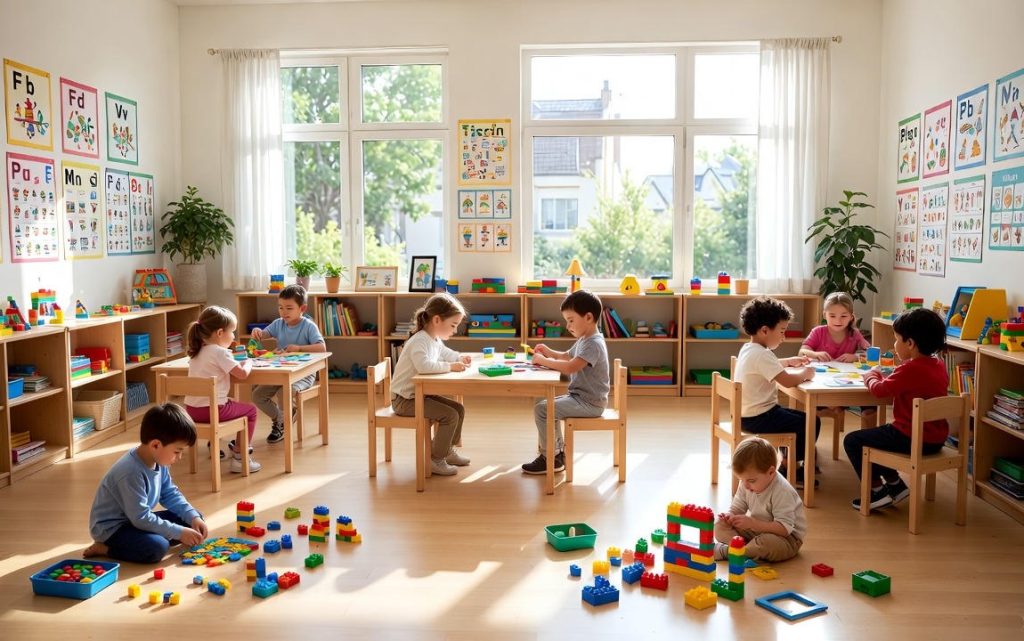
Every Montessori classroom is arranged to encourage independence. Materials are placed on low shelves, seating is flexible, and everything is child-sized. Children can choose activities freely and return materials on their own.
2. Hands-On Learning with Materials
Montessori materials teach academic concepts through movement and touch. Children use beads to learn math, sandpaper letters to learn writing, and practical life tools (like pouring pitchers or sweeping) to develop coordination and responsibility.
3. Mixed-Age Groupings
Classes usually span three years (such as ages 3–6). Older students act as leaders and mentors; younger ones benefit from observing more experienced peers.
4. Child-Led Learning
Children choose their activities based on interest, developmental readiness, and curiosity. Teachers observe rather than dictate, giving lessons at the right time for each child.
5. Respect for the Child
Montessori classrooms value calm interactions, patience, and honor each child’s individuality, pace, and personality.
6. Real-Life Skills (Practical Life)
Montessori emphasizes independence through daily tasks tying shoes, cleaning up spills, preparing snacks, watering plants, etc. This builds confidence, discipline, and coordination.
This natural, respectful method helps children feel capable and proud of their accomplishments.
Research-Based Benefits of Montessori Education
Growing empirical evidence supports that Montessori education when done well delivers strong results on both academic and non-academic outcomes. This is particularly relevant for Miami parents deciding on early childhood education.
Academic Achievement and Long-Term Success
- Several controlled and randomized-design studies find that children who attend Montessori preschools/elementary schools perform better on academic and pre-academic assessments than peers in non-Montessori schools.
- Long-term follow-up research suggests the benefits may last into adolescence students who experienced Montessori from early grades often show continued academic engagement and success compared to matched peers.
Socio-Emotional Growth & Well-Being
- Beyond academics, Montessori students consistently show stronger socio-emotional outcomes: better social understanding, cooperation, empathy, and emotional regulation.
- Adolescents who attended Montessori report more positive perceptions of their school, stronger relationships with peers, higher intrinsic motivation, enthusiasm, and sense of agency.
Creativity & Higher-Order Thinking
- Research from European contexts shows Montessori-educated children often outperform peers on creativity tasks, suggesting Montessori environments may foster divergent thinking, imagination, and creative problem-solving.
- Even in writing, Montessori students’ essays have been rated as more creative and structurally sophisticated compared to non-Montessori peers.
Executive Function, Focus & Self-Regulation
- Montessori children often show better executive functioning supporting working memory, self-control, planning, and organization.
- These supports for self-regulation and sustained focus can lay a foundation for lifelong learning, discipline, and adaptability.
Inclusivity, Diversity & Equitable Environments
- Many public Montessori schools serve racially and ethnically diverse populations, making Montessori education more accessible to a broad range of families.
- Some studies suggest Montessori settings have fewer disparities in school discipline which can create safer, more inclusive environments for children from different backgrounds.
Implication for Miami Parents: Given Miami’s cultural, ethnic, and socioeconomic diversity, Montessori’s proven strengths in inclusivity, social-emotional development, bilingual or multilingual readiness, academic performance, and nurturing independence make it a strong candidate for early childhood and elementary education.
Important Note: These positive outcomes are most likely when a Montessori school follows the method with high fidelity. Not all schools labeled “Montessori” do so. As a parent, you may want to check the training of teachers, classroom setup, mixed-age grouping, materials used to ensure your child gets the full benefit of Montessori education.
Why Montessori Works Especially Well for Miami Families
Miami is one of the most culturally diverse cities in the U.S. Families come from many backgrounds, languages, and traditions. Montessori education respects each child’s individuality making it a natural fit for such diversity.
Parents in Miami often choose Montessori because it:
- Supports bilingual or multilingual fluency (English + Spanish or more), especially important in multicultural communities.
- Encourages independence, self-regulation, and responsibility traits that help children succeed both in and out of school.
- Develops social-emotional skills, cultural empathy, and global-mindedness.
- Creates calm routines and structure, which can benefit busy urban family life.
- Lays a solid academic foundation while also developing creativity, focus, and a lifelong love for learning.
Montessori schools often also include outdoor time, community building, and a strong sense of belonging all helpful in a vibrant city like Miami.
Book a Tour at Muss Family Montessori
If you want a school where your child feels respected, supported, and inspired, we invite you to visit us at Muss Family Montessori.
Come explore our Montessori classrooms, meet our dedicated teachers, and see how hands-on learning can shape your child’s future with confidence and joy.
Schedule a Tour Today
Experience why so many Miami families choose Muss Family Montessori for their child’s early education.Book your visit or connect with Debbie Serbin on LinkedIn.